.png)


A Deep Dive into the Benefits of the Montessori Approach in Early Childhood Education


Is the focus on worksheets, speedy results, and classroom performance in early education growing excessive? Nowadays, a lot of young kids feel pressure before they even realize how much joy learning can be. Preschool years must encourage self-confidence, curiosity, emotional comfort, and inventiveness. The Montessori approach in early childhood education helps kids learn via hands-on and engaging experiences.
During everyday activities, they actively take part, freely ask questions, and develop crucial life habits. At The Vivekananda School, learning spaces are mindfully created to give kids a sense of safety, expression, and engagement during the day. Also, they build strong foundations for future learning experiences. Let's first know why early childhood learning needs a different approach!
Why Does Early Childhood Learning Need a Different Approach?
Children's responses to learning are shaped during their early school years. They quickly pick up emotions, behaviors, routines, and language in this phase. Kids can learn daily routines and topics. Also, they feel emotionally safe in a calm and engaging classroom.
Moreover, the early childhood education curriculum works best. It is when students actively take part in storytelling, activities, discussions, movement sessions, and hands-on learning experiences. A lot of parents who are looking for good schools in Gurgaon hunt for classrooms where kids enjoy coming to school daily.
At The Vivekananda School, the Montessori approach in early childhood education focuses on real-world experiences. These activities make Vivekians feel engaged in the learning process. From a young age, this develops independent thinking habits, better speaking skills, and longer attention spans.
Benefits of the Montessori Approach in Early Education
There are many benefits of the Montessori approach in early childhood education. It is helpful for young learners during their formative years. Its benefits are:
1. Builds Independent Thinking
Young kids slowly pick up the ability to perform basic tasks without constant adult guidance. They are motivated to make choices, arrange materials, and work on small issues on their own through classroom activities. This will boost self-esteem and make kids more expressive, accountable, and at ease.
2. Improves Focus and Patience
Many young kids find it hard to sit with calm or focus for longer periods of time. Kids can repeat tasks at their own pace without any hurry when they perform Montessori learning activities. This slow learning process enhances focus, patience, listening skills, and classroom discipline. In addition, kids stay emotionally calm during activities.
3. Encourages Communication Skills
Children's communication skills improve. It is when classrooms routinely promote storytelling, discussions, and group interaction. Kids can freely share their opinions via activities. It includes activities like show-and-tell sessions and circle time talks. This lessens stress while speaking with teachers and classmates. And enhances listening confidence, vocabulary, social comfort, and classroom interaction.
4. Makes Learning Feel Joyful
When learning is fun and interesting, younger students participate more actively. Kids can keep an emotional connection to studies. It is through creative activities, movement-based activities, sensory play, and hands-on classroom experiences. In their early years, this supportive classroom atmosphere fosters children's natural interest. Also, it helps them develop a sincere passion for learning.
5. Supports Emotional Development
Children require emotionally safe classrooms that constantly support, value, and understand them. They may interact well with their friends, adapt to new habits, and express their emotions calmly. In Montessori learning environments, they can do it with comfort. During preschool learning experiences, this emotional stability enhances various skills. These are social connection, self-assurance, classroom involvement, and overall happiness.
6. Develops Real-Life Skills Early
Children learn valuable life skills at a young age via simple daily classroom tasks. Discipline and duty are improved by tasks like organizing activity materials, cleaning learning spaces, carrying things properly, and following routines carefully. Kids benefit from such experiences by slowly becoming more confident, organized, and ready for future classroom atmosphere.

How the Vivekananda School Creates Meaningful Early Learning Experiences?
Parents look for schools in Gurgaon Sector 49 for their kids. They often search for classrooms where kids feel mentally safe and slowly gain confidence. With engaging preschool activities, The Vivekananda School strikes this balance thoughtfully. The school promotes:
Activity-based learning in the classroom through storytelling circle and sensory play.
Reading and storytelling sessions with interactive classroom discussions and picture books.
Creative expression via dance, clay modelling, art, and music-based activities.
Fun celebrations with stage performances, festival events, and cultural involvement.
Increasing classroom engagement. It is through group discussions and show-and-tell sessions.
Safe student-teacher bonding during guided classroom engagement and circle time activities.
Many parents are seeking modern Montessori Gurgaon. They value classrooms where kids feel happy, engaged, and emotionally attached to school life.
With regular classroom experiences, teachers at The Vivekananda School patiently mentor students. They also foster inventiveness, curiosity, discipline, and independent thinking.
The school offers opportunities for group projects, stage exposure, interactive learning activities, and celebrations. It helps each kid to develop social skills from a young age.
Final Words
So early childhood experiences shape a child's personality, self-confidence, speaking style, and life habits. However, these habits grow with time. Children require learning environments where making mistakes is a natural part of learning and curiosity is encouraged. This path is supported by the Montessori approach in early childhood education. It keeps kids engaged, active, independent, and mentally stable in the class.
At The Vivekananda School, young students get innovative exposure, mindful guidance, and playful learning experiences. These activities promote balanced growth. This nurturing environment turns into a reassuring start where kids learn happily and develop lifelong skills.
FAQs
1. Why do parents prefer the Montessori approach in early childhood education?
Encourages self-assurance via hands-on classroom activities.
Makes learning more playful for kids every day.
Improves the ability to communicate and think independently.
Creates learning settings that are emotionally comfortable.
Develops tolerance, focus, and social skills.
2. How do schools in Ggn support preschool learning?
Routinely engages in circle time and storytelling activities.
Organizes dance, art, and music sessions.
Emphasizes kid participation and emotional comfort.
Encourages learning via hands-on activities.
Promotes classroom communication and stage participation.
3. What skills do kids build during Montessori learning?
Increased focus during class activities.
Improved speaking and listening activities.
Stronger social bonding and emotional understanding.
Independent skills through daily practical tasks.
Creative thinking and skills to solve problems.
4. Why are parents in Gurgaon looking at Montessori-style schools?
Parents prefer them due to their emotionally supportive learning environments.
Learning is less stressful, more creative, and joyful.
Children get attention with smaller interactive activities.
Personality growth and academics are given equal focus.
From an early age, practical experiences boost confidence.
5. How may parents who have questions about admission get in touch with The Vivekananda School?
Call us at +91 8800902881 or +91 9560102881 to ask your queries.
Email your queries to thevivekanandaschool@gmail.com.
Families are urged to have a personal visit to the school.


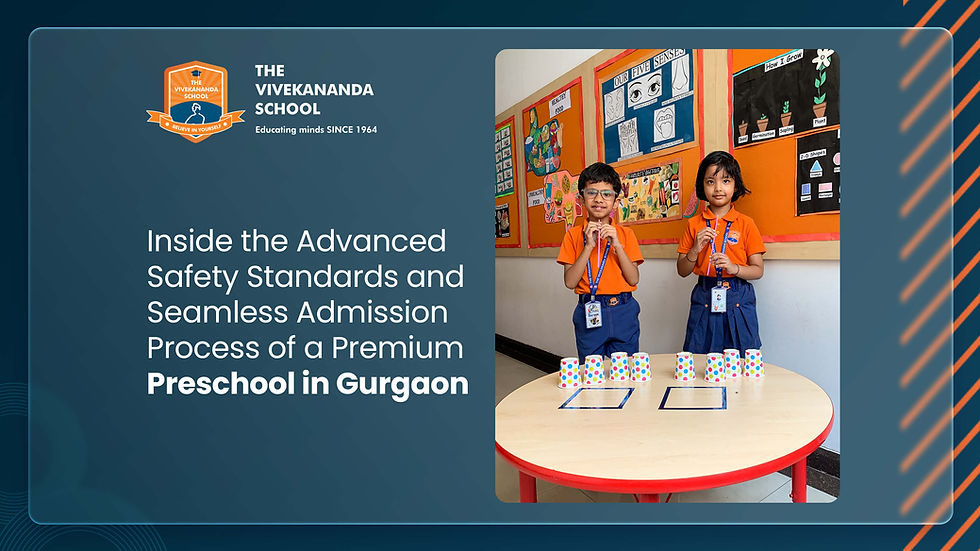
Choosing a Montessori preschool near me is a great way to support a child's early learning and development. Montessori education encourages independence, creativity, and hands-on exploration in a carefully prepared environment. With experienced teachers and age-appropriate activities, children can build confidence, improve problem-solving skills, and develop a lifelong love of learning. Taking the time to find the right Montessori preschool can provide a strong educational foundation while giving parents peace of mind.